
The fastest way to find Christian homeschool groups in Peoria is to check three local co-ops directly, browse the Arizona Christian Homeschools directory for city-specific listings, and confirm ESA eligibility before you commit. Most Peoria groups offer weekly classes, monthly park days, sports leagues, and enrichment electives, with membership fees ranging from modest annual dues to per-class rates. Families new to the area typically land in a group within two to three weeks of starting the search.
TL;DR:
- Most Peoria homeschool groups offer flexible membership options, with fees ranging from annual dues to per-class rates, and many list costs publicly.
- Parent-led co-ops typically require ongoing volunteer teaching, while tutor-led models like Ignite provide subject-specific instruction, catering to different parental commitments.
- Enrichment activities such as sports leagues, drama programs, and seasonal STEM workshops supplement core co-op classes, with faith-based leagues often opening and closing with prayer.
- When choosing a group, consider theology, teaching philosophy, schedule, fees, and support for special needs, asking specific questions and avoiding vague or hesitant answers.
- Using a centralized directory simplifies contact and comparison by listing programs’ details, meeting schedules, fees, and ESA eligibility, helping families find the best fit efficiently.
Table of Contents
- Christian Homeschool Groups in Peoria: Spotlighted Co-ops
- How Academic Co-ops and Class Communities Work
- Christian Sports, Clubs, and Enrichment Activities Near Peoria
- Support Groups, Park Days, and Casual Meetups
- How to Choose the Right Christian Homeschool Group
- How to Contact and Visit a Peoria Homeschool Group
- Where Peoria Families Find Verified Group Information
- A Practical Word From Grant
- Find Your Peoria Co-op Faster With Arizona Christian Homeschools
- Sources
- FAQ
Christian Homeschool Groups in Peoria: Spotlighted Co-ops
Peoria families have real options, and each one serves a slightly different need. Some parents want a full academic co-op with weekly attendance; others just want a Friday morning class and a nursery for younger siblings. Here's what stands out about each group currently serving the area.
- Peoria Area Association of Christian Homeschoolers (PAACH) draws a large number of member families and meets monthly, with drop-off activities available for kids and a subscriber fee that covers member benefits throughout the year. The group's HSLDA listing spells out group size, meeting cadence, and cost up front, which makes it an easy first stop for families comparing options.
- Peoria Cooperative Academy (PCA) runs weekly co-op classes spanning beginner levels through high school, including choir and drama, and several electives that can translate into high school credit. Details on schedule and course offerings live on PCA's group page.
- Branches (Branches West Valley) operates as a class and community model built for families across the broader West Valley, giving Peoria parents a slightly larger network of co-op families and course options beyond a single-city footprint.
- Ignite Homeschool Ministries leans on tutor-led classes rather than a pure parent-teaching model, paired with family events that build community outside the classroom. This structure appeals to parents who want subject-matter instructors handling core content.
- Tri-County Enrichment Co-op follows a multi-family, parent-run structure with Friday morning classes for Pre-K through 12th grade and nursery care for younger siblings during class time.
Pro Tip: Before you email a coordinator, check whether the group lists its fee structure and meeting cadence publicly. Groups that post this information (like PAACH and PCA both do) tend to be more organized and responsive when you reach out.
Your next step with any of these five is simple: pick the two that fit your schedule best, send a short introductory email, and ask about visitor policies before enrolling.
How Academic Co-ops and Class Communities Work
Most Peoria-area academic co-ops run on a weekly class day, often Friday mornings, with grade-level splits that separate elementary, middle, and high school students into different rooms or tracks. Tri-County Enrichment Co-op follows this exact pattern, running classes for Pre-K through 12th grade on Fridays with sibling nursery care built in.
Two staffing models dominate the local landscape. Parent-led labs ask moms and dads to rotate teaching duties, which keeps costs low but requires real time commitment from every family. Staffed tutorial models, like the one Ignite Homeschool Ministries uses, hire subject-matter tutors so parents can drop off and focus on other responsibilities during class hours.
High schoolers get the most out of co-ops that offer courses translating into transcript credit. PCA's electives, including choir and drama, fall into this category, and many co-ops around Peoria now build speech, fine arts, and lab science courses specifically because parents need those credits documented for college applications.
Membership works differently depending on the group:
- Some co-ops charge a flat annual fee (PAACH's subscriber model is one example).
- Others bill per class or per semester, which suits families who only want one or two electives.
- Drop-off availability varies. Ask directly whether parents must stay on-site during class hours.
Christian Sports, Clubs, and Enrichment Activities Near Peoria
Academic co-ops cover core subjects, but enrichment activities are where homeschooled kids build friendships and try things a weekly class schedule doesn't allow for. Peoria families typically supplement their co-op with one or two of the following:
- Sports leagues built specifically for homeschoolers, distinct from general recreational leagues, often meet during weekday hours when public school kids are in class.
- Choir, drama, and theater programs frequently run inside larger co-ops like PCA rather than as standalone clubs.
- STEM and art workshops pop up seasonally through smaller family-run groups and church partnerships.
Finding a genuinely Christian-specific option versus a general homeschool league takes a little digging. General homeschool sports leagues welcome all worldviews, while faith-based leagues usually open and close practice with prayer or devotion and require a statement of faith from coaching staff. Costs run modestly compared to competitive club sports, typically covering uniforms, facility rental, and a coordinator's stipend rather than travel or private coaching. Supervision models lean heavily on parent volunteers, so expect a sign-up sheet at your first practice.
Support Groups, Park Days, and Casual Meetups
Not every family wants a structured co-op right away. Peoria has a strong layer of informal support built around monthly meetings, park days, and family events that ask for zero long-term commitment.
- Monthly support group meetings typically gather parents for encouragement, curriculum swaps, and logistics talk while kids play separately. PAACH's structure includes this kind of regular gathering alongside its academic offerings.
- Park days happen weekly or biweekly in most neighborhoods, organized informally through group text chains or Facebook groups tied to a specific co-op.
- Family events, like holiday gatherings or field days, tend to happen a few times a year and work well as a low-pressure way to meet other families before committing to anything formal.
Before you show up to any playgroup, run through a short safety checklist: confirm there's an adult sign-in process, ask whether a designated adult supervises younger kids at all times, and mention any allergies or medical needs before the first visit. Groups organized through established co-ops like PAACH or PCA usually already have these safeguards built into their event structure, which is one more reason to start your search there.
How to Choose the Right Christian Homeschool Group
Fit matters more than proximity. A group ten minutes further away that shares your theology and teaching philosophy will serve your family better than the closest option that doesn't.
Weigh these criteria before you commit to any group:
- Theology and denomination. Some families do better in a denomination-specific community. Faith-specific groups, including options like St. Therese Catholic Home Schooling, often provide stronger mentoring and social fit than a broad nondenominational co-op.
- Teaching philosophy. Classical, unit-study, and eclectic approaches all show up in Peoria co-ops. If you're still deciding what fits, comparing Christian and secular homeschool approaches helps clarify your priorities before you visit anyone.
- Schedule and location. Weekly versus monthly meetings, and drive time, matter more once you factor in siblings and other commitments.
- Cost and age mix. Confirm whether fees are per family or per child, and whether the group serves a wide age range or narrows to elementary only.
- Special-needs support. Ask directly whether the co-op has experience or accommodations for kids with learning differences.
When you talk to a coordinator, ask specific questions: What curriculum does the group use across core subjects? Do teachers hold any credentials, or is this entirely parent-led? What's the attendance policy if we need to miss a week? What safety and background-check policies apply to volunteers?
Pro Tip: Ask every coordinator the same five questions. Comparing identical answers across two or three groups reveals differences you'd otherwise miss in casual conversation.
Watch for red flags: vague answers about fees, no clear safety or sign-in policy, or reluctance to let you attend a class before joining. A well-run group answers these questions without hesitation.
How to Contact and Visit a Peoria Homeschool Group
Reaching out doesn't need to be complicated. A short email or message works better than a long introduction, and most coordinators respond within a few days.
- Send a brief inquiry that includes your children's ages, your preferred start date, and any special needs your family wants addressed up front.
- Ask about visiting before you commit. Most co-ops, including PCA and PAACH, allow a trial visit so you can watch a class in session.
- Bring a notebook and a list of questions to your visit, and watch how leaders handle transitions between activities. That tells you more about organization than any website description.
- Confirm ESA eligibility directly with the group if you plan to use Empowerment Scholarship Account funds for tuition, materials, or enrichment fees. Not every program qualifies for every ESA-eligible expense category, so ask for documentation rather than assuming.
Local leaders consistently recommend meeting coordinators in person at events, such as new-family nights, rather than relying only on directory listings. Personal introductions tend to produce better matches than cold outreach alone.
Where Peoria Families Find Verified Group Information
Reliable information matters as much as the group itself. The Arizona Christian Homeschools Peoria guide lists co-ops, microschools, tutors, and ESA notes specific to the city, giving families one place to compare programs before making calls.
For association context and membership benefits, HSLDA's group directory hosts pages for groups like PAACH and PCA, both of which list:
- Group size and monthly meeting details
- Drop-off activity availability
- Membership fee structure
- Contact information for coordinators
Families researching options beyond Peoria's city limits will also find the statewide guide to Arizona homeschool groups useful for comparing regional differences in fees and format.
A Practical Word From Grant
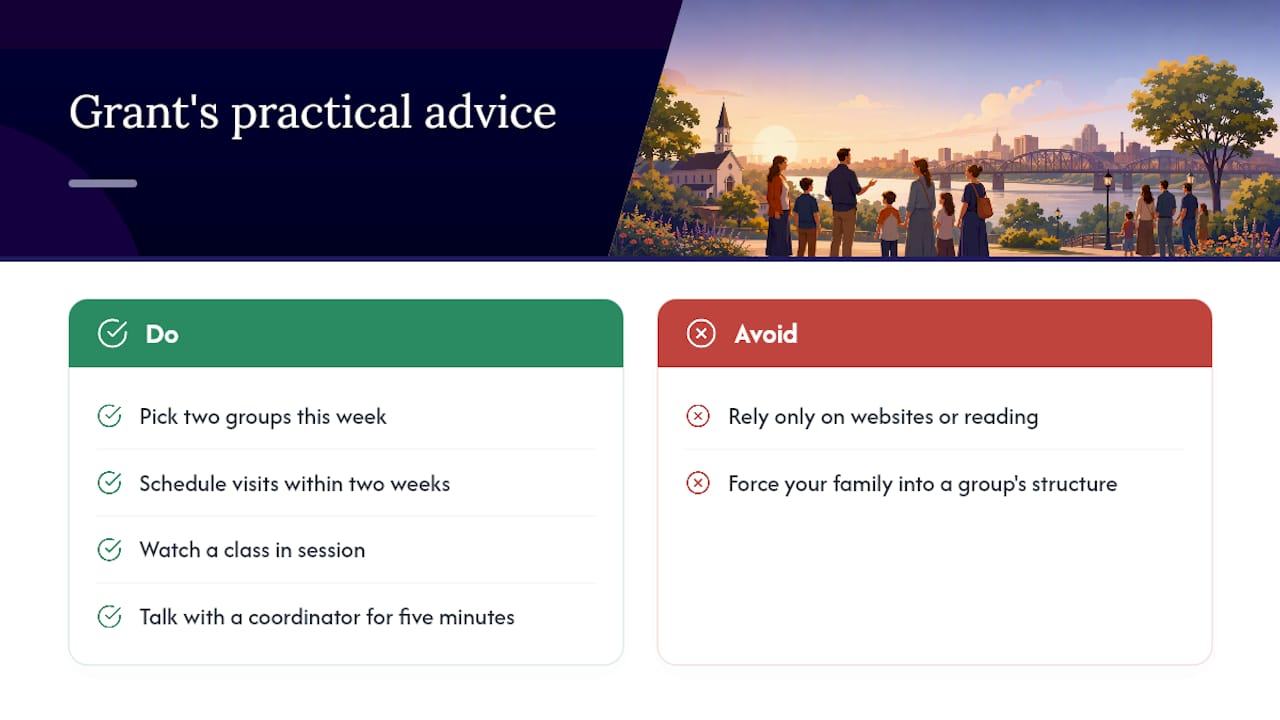
Pick two groups this week and schedule visits within the next two weeks. That's the single move that gets most families unstuck. Reading about co-ops only takes you so far. Watching a class in session, five minutes of conversation with a coordinator, tells you more than any website copy ever will.
What stands out after looking closely at Peoria's options is how differently each group defines "community." PAACH leans on monthly gatherings and drop-off flexibility. Tri-County Enrichment Co-op leans on Friday mornings and family involvement. Neither approach is wrong, but they suit very different family rhythms. Don't force your family into a group's structure. Find the one that already matches how you live.
— Grant
Find Your Peoria Co-op Faster With Arizona Christian Homeschools
Instead of calling five different coordinators to compare fees and schedules, A comprehensive directory puts every Christian co-op, microschool, and tutor serving Peoria in one searchable place, including ESA eligibility notes you'd otherwise have to request directly from each program.
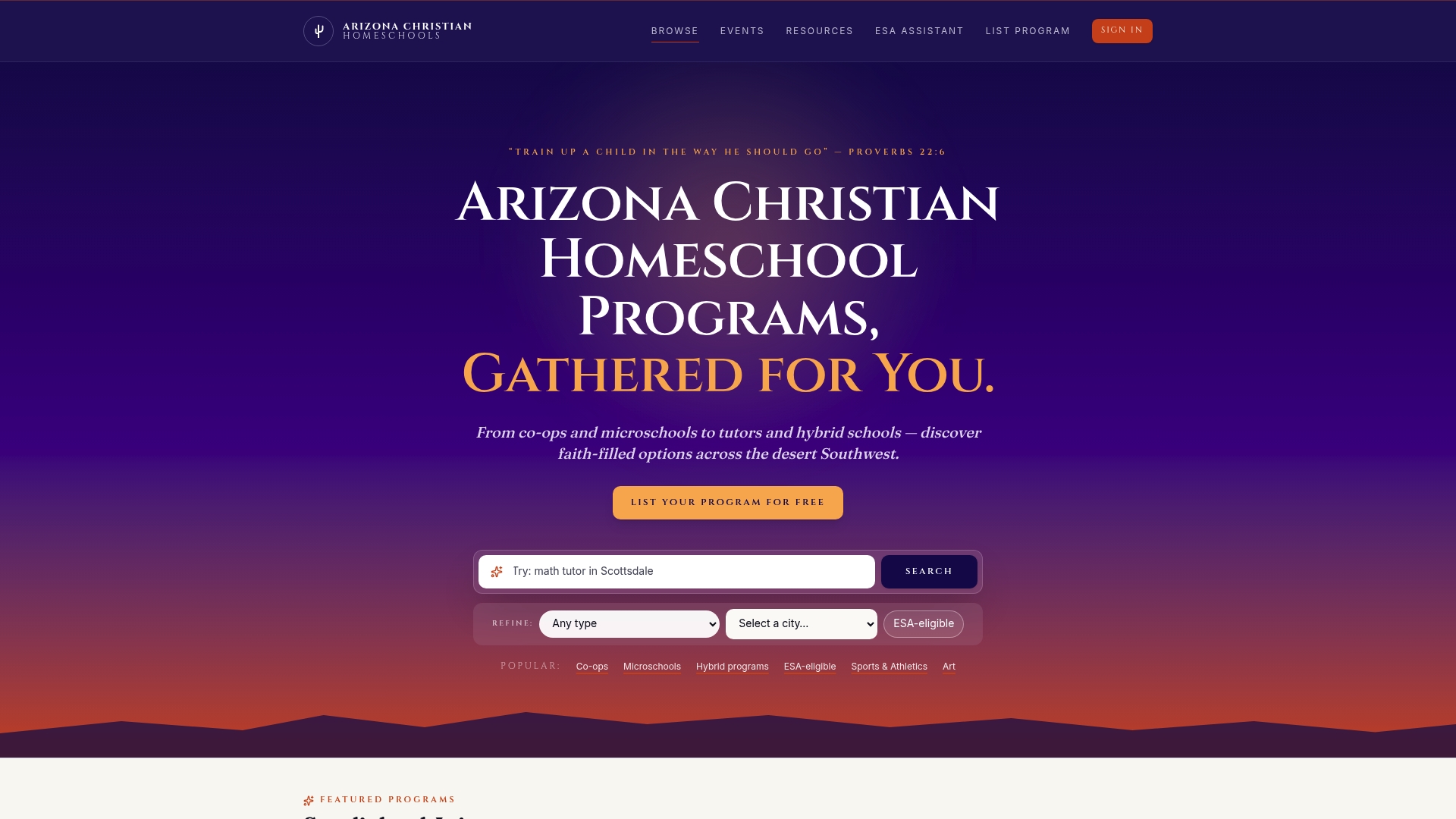
The Homeschool Co-ops Near Me directory lets you search by city, filter by program type, and find contact links without digging through separate Facebook groups or outdated listing pages. Families typically use it to build a shortlist of three or four groups before making any calls, which saves the back-and-forth of finding programs that don't even serve their area or age range. If you're ready to compare Peoria's options side by side, start your search on the directory now and reach out to your top picks this week.
Sources
- Peoria Area Association of Christian Homeschoolers (PAACH)
- Home School Legal Defense Association (HSLDA)
FAQ
How much money do parents get for homeschooling in Arizona?
Arizona's Empowerment Scholarship Account program funds eligible educational expenses rather than paying a fixed cash amount to parents. The exact award depends on the student's grade level and needs, so families should confirm current figures and eligible expense categories directly with the ESA program before budgeting.
What are some homeschool groups in Arizona?
Peoria families have access to groups including PAACH, Peoria Cooperative Academy, Branches, Ignite Homeschool Ministries, and Tri-County Enrichment Co-op, with additional options listed in the statewide Arizona homeschool groups guide.
How do I find friends for my homeschooled child?
Park days, monthly support-group meetings, and co-op classes are the most reliable ways to build social connections, and attending in-person events like new-family nights tends to produce stronger, faster friendships than joining a Facebook group alone.
What are the best homeschool programs in Arizona?
The best fit depends on your family's theology, teaching style, and schedule needs. Comparing a few programs directly through the Peoria-specific co-op guide helps you narrow the list before scheduling visits.
Do Peoria homeschool co-ops accept ESA funding?
Many programs accept ESA funds for tuition, materials, or specific enrichment classes, but eligibility varies by program and expense category. Confirm directly with each coordinator and request documentation before enrolling.