
Saxon Math is the stronger fit for children who need daily routine, repetition, and a predictable lesson structure. Singapore Math serves children who thrive on conceptual depth, visual problem solving, and fewer but harder problems. For most families comparing these two programs, the decision comes down to three practical factors:
- Approach: Saxon Math uses a spiral method, cycling through previously learned skills every single day. Singapore Math uses a mastery sequence built on the Concrete–Pictorial–Abstract (CPA) progression, spending more time on fewer topics before moving forward.
- Daily time: Saxon sessions typically run longer in elementary grades, often requiring more time at the table, whereas Singapore lessons usually fit into shorter daily blocks with higher cognitive demand per problem.
- Parent comfort: If you are not confident teaching math concepts yourself, Saxon's scripted lessons reduce the instructional load. Singapore requires a parent willing to learn bar modeling and the CPA method alongside their child.
Arizonachristianhomeschools lists both programs with Arizona-specific reviews and local support resources, and both may qualify for Arizona's Empowerment Scholarship Account (ESA) funding.
Table of Contents
- How do Saxon and Singapore Math compare side by side?
- What is Saxon Math and how does it work?
- What is Singapore Math and how does it work?
- How do spiral review and mastery produce different results day to day?
- Which student profiles fit Saxon or Singapore best?
- How do you choose and place your child in the right program?
- What do materials cost and how long are daily lessons?
- What does the research say about these two programs?
- Key Takeaways
- A homeschool advisor's perspective on this choice
- Where to read further and find local resources
- Arizonachristianhomeschools connects you to the right math support
How do Saxon and Singapore Math compare side by side?
| Dimension | Saxon Math | Singapore Math |
|---|---|---|
| Teaching approach | Spiral: daily mixed review of all prior topics | Mastery: CPA sequence, topic-by-topic depth |
| Practice & review frequency | ~80% review, ~20% new content per lesson | Concentrated new-topic practice; periodic revisits |
| Parent involvement | High; scripted lessons reduce subject expertise needed | Moderate–high; parent must understand bar modeling and CPA |
| Pacing & scope by grade | Incremental, steady; covers many topics shallowly each year | Fewer topics per year, covered deeply before advancing |
| Lesson length / daily workload | 30–60 min (elementary); 25–30 problems per set | 15–30 min; 10–15 problems requiring multi-step reasoning |
| Materials & cost | Full kit (student book, teacher guide, manipulatives): often higher; ~$100–170+ per year | Books-only cost typically lower; ~$100–170 per year for core texts |
| Best-for | Routine-dependent learners, less confident math parents | Visual/analytical learners, parents comfortable with conceptual teaching |
| Placement / switching difficulty | Placement tests available; must complete in order | Placement tests available; switching from Saxon requires gap-filling |
| Availability / editions (US) | HMH editions K–12; widely available new and used | Primary Mathematics, Dimensions (US editions); Singapore Math Inc. |
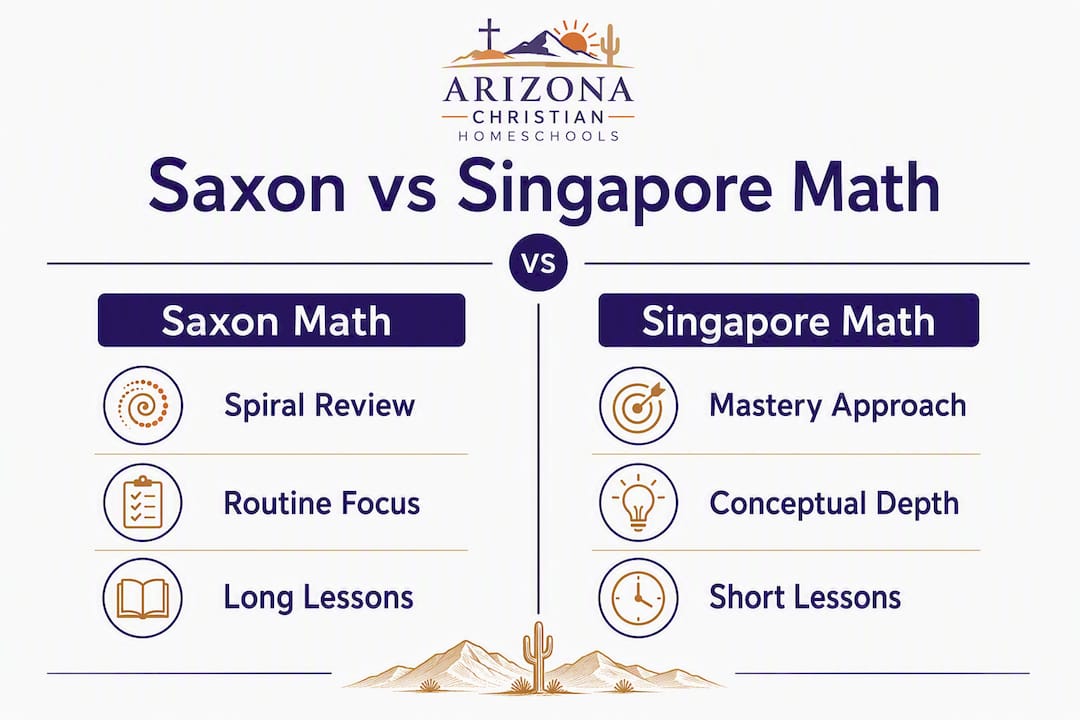
The most consequential week-to-week difference is time versus depth. Saxon families spend more minutes at the table each day but rarely feel lost because the review is constant. Singapore families finish lessons faster but must sit with harder problems and resist the urge to rush past a concept before it is truly understood.
Quick pros and cons:
Saxon Math
- Pros: Built-in spaced review, scripted lessons, predictable structure, widely available used
- Cons: Long daily sessions, can feel repetitive for advanced learners, less emphasis on conceptual reasoning
Singapore Math
- Pros: Shorter lessons, strong conceptual foundation, excellent word-problem training, lower book cost
- Cons: Steeper parent learning curve, fewer practice problems per lesson, switching in mid-program requires careful placement
What is Saxon Math and how does it work?
Saxon Math, published by Houghton Mifflin Harcourt (HMH), is a K–12 curriculum built on incremental instruction and daily cumulative review. The What Works Clearinghouse describes its core design: new math content is limited each day, and students practice concepts cumulatively rather than in discrete chapters. That structure is the program's defining feature, not a side effect.

A typical Saxon lesson in elementary grades follows four steps: a warm-up drill (facts practice and mental math), a scripted new-teach segment the parent reads aloud, a guided practice set on the new concept, and a mixed review set pulling from all prior lessons. The scripted language is specific enough that a parent with no formal math teaching background can deliver the lesson confidently.
| Grade range | Approx. lesson time | Problems per set | New content per lesson |
|---|---|---|---|
| K–3 | 30–35 min | 20–25 | ~20% |
| 4–6 | 45–60 min | 25–30 | ~20% |
| 7–8 (pre-algebra) | 60–90 min | 25–30 | ~20% |
Common parent experiences with Saxon:
- The scripted format builds parent confidence quickly, especially for families new to homeschooling
- Students who struggle with memory or processing benefit from the daily review cycle
- Advanced or conceptually curious learners sometimes find the repetition tedious by grades 4–5
- The curriculum must be completed in order; skipping lessons breaks the spiral scaffolding and is one of the most common implementation mistakes
- Teacher editions and manipulative kits add cost but are considered optional in early grades by many families
Saxon's placement tests are straightforward: students complete a short diagnostic, and the result maps directly to a level. Transitioning out of Saxon into a mastery program later is generally manageable because the spiral review tends to keep gaps small.
What is Singapore Math and how does it work?
Singapore Math centers on the Concrete–Pictorial–Abstract (CPA) progression, a sequence in which students first manipulate physical objects, then work with diagrams and visual models, and finally operate with abstract numbers and symbols. The method was developed in Singapore and adapted for U.S. classrooms through two main editions: Primary Mathematics (the original US edition, now updated) and Dimensions Math, published by Singapore Math Inc. Both are widely available and used by American homeschoolers.
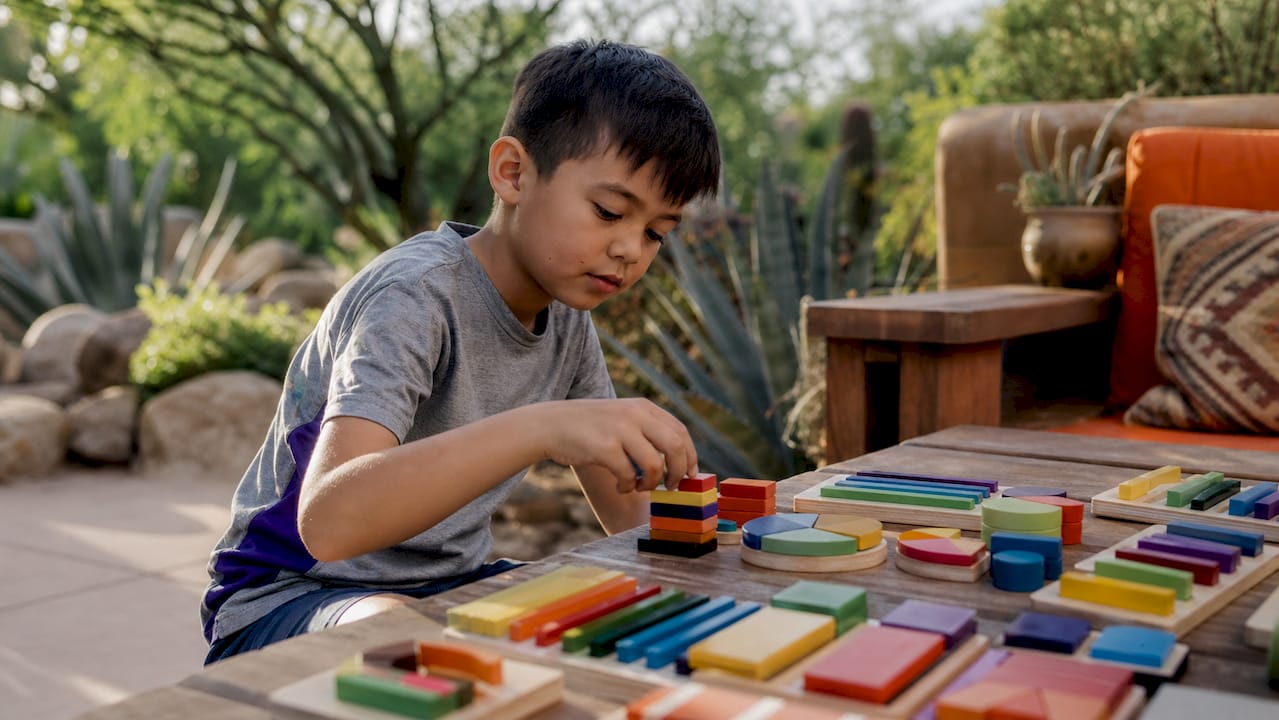
A typical Singapore lesson is shorter than a Saxon lesson but asks more of the student per problem. Rather than 25 problems reviewing six different skills, a Singapore workbook page might present 10–15 problems on a single concept, with several requiring multi-step bar model reasoning. Bar modeling is the program's signature tool: students draw rectangular bars to represent quantities and relationships, making abstract word problems visually concrete before writing a single equation.
Key features of Singapore Math:
- Mastery sequence: a topic is taught, practiced, and understood before the next topic begins
- Bar modeling builds strong word-problem skills that transfer well to algebra
- Mental math strategies are emphasized early; standard U.S. algorithms are introduced later than in most American curricula
- Manipulatives (linking cubes, base-ten blocks) are used in early grades but are not as central as in Math-U-See or RightStart Math
- Parent involvement is real: the teacher guides explain the CPA method, but a parent who introduces standard algorithms too early can disrupt the conceptual sequence the program depends on
U.S. edition notes: Primary Mathematics (Standards Edition and US Edition) aligns closely to Common Core in some versions. Dimensions Math is the newer series and is generally considered more teacher-friendly for homeschool use. Placement tests for both editions are available free from Singapore Math Inc. and are worth running before purchasing any level.
How do spiral review and mastery produce different results day to day?
The pedagogical gap between Saxon and Singapore is not just philosophical. It shows up in how children remember material, handle novel problems, and build stamina over a school year.
Saxon's spaced mixed review means a child who learned multiplication in October will still practice it every day in March. That daily repetition builds procedural fluency and reduces the chance of forgetting. The tradeoff is that lessons stay broad rather than deep. A child may be able to execute a procedure correctly without fully understanding why it works.
Singapore's concentrated mastery approach does the opposite. A child spends two or three weeks on, say, fractions, working through concrete, pictorial, and abstract representations before moving on. When the topic returns later, it comes back at a higher level of complexity rather than as identical review. This builds stronger conceptual understanding and better prepares students for multi-step and novel problems, but it demands more from the child during the initial learning phase.
Curriculum comparisons consistently note that both programs are academically rigorous and both have track records of raising standardized test scores when implemented as designed. The difference is in how rigor is delivered, not whether it exists.
Practical workload trade-offs:
- Saxon: more problems, more time, broader daily coverage, lower per-problem cognitive demand
- Singapore: fewer problems, shorter sessions, narrower daily focus, higher per-problem cognitive demand
- Retention: Saxon's daily review supports procedural retention; Singapore's depth supports conceptual retention and transfer
- Word problems: Singapore students typically outperform on multi-step word problems; Saxon students often have stronger fact fluency
Pro Tip: If your child finishes Singapore lessons quickly and seems under-challenged, resist adding more problems from the same page. Instead, try a challenge extension from the Challenging Word Problems supplemental books before moving to the next lesson.
Which student profiles fit Saxon or Singapore best?
Matching a curriculum to a child's learning profile matters more than picking the "better" program in the abstract. Here is how common learner types align:
- Needs routine and repetition: Saxon. The predictable four-part lesson structure and daily review give these students a reliable rhythm that reduces anxiety.
- Visual and analytical learner: Singapore. Bar modeling and the CPA sequence reward children who think in pictures and enjoy reasoning through problems.
- Gifted or advanced learner: Singapore, or supplement Saxon with Art of Problem Solving materials. Saxon's repetition can frustrate a child who grasps concepts quickly.
- Struggling learner or slow processor: Saxon for most cases, or consider Math-U-See, which adds heavy manipulative use and smaller instructional blocks. Video supplements make either program more accessible for students who need repeated explanation.
- Independent learner: Older students (grades 5+) can often work through Saxon independently because the lessons are scripted and self-explanatory. Singapore at the same level usually requires more parent interaction.
- Short attention span or stamina issues: Singapore's shorter daily sessions are often a better fit. A 20-minute focused lesson is more sustainable than a 60-minute mixed review for a child who fatigues quickly.
Special-needs considerations: For children with ADHD, Saxon's predictable structure can be grounding, but the long lesson time may require breaking the session into two shorter blocks. For children with dyslexia, Singapore's visual bar models can actually reduce reading load on word problems once the method is learned. Both programs benefit from added video instruction, such as Nicole the Math Lady for Saxon or the Singapore Math Inc. video lessons for Dimensions Math.
Two brief case examples: A 9-year-old who loves patterns and asks "why does that work?" will likely thrive in Singapore 3A/3B, where the bar model problems reward exactly that curiosity. A 7-year-old who needs to see the same concept twelve times before it sticks, and whose parent has limited math confidence, is a natural fit for Saxon 2 with its scripted daily lessons and built-in review.
How do you choose and place your child in the right program?
Start with a placement test before purchasing anything. Both Saxon and Singapore Math Inc. offer free placement tests on their websites. Run the test at the grade level you expect, and if your child scores below 80%, drop one level.
Step-by-step selection checklist:
- Download and administer the placement test for both programs at the expected grade level.
- Time one sample lesson from each program with your child to gauge engagement and stamina.
- Assess your own comfort: are you willing to learn bar modeling, or do you prefer a scripted lesson you can read aloud?
- Check your daily schedule: can you consistently give 60–90 minutes to math, or is 20–40 minutes more realistic?
- Review the scope and sequence for each program at your child's level to confirm the topics match your goals.
Red flags that suggest a mismatch:
- Your child consistently finishes Saxon in under 20 minutes and makes no errors (likely under-placed or needs a more challenging program)
- Your child is in tears after every Singapore lesson because the problems feel impossible (may need to drop a level or switch to Saxon temporarily)
- Lessons regularly run 30+ minutes over the expected time (placement may be too high, or the method needs adjustment)
- Your child can execute procedures but cannot explain what they did (Saxon may need conceptual supplements; Singapore may be a better long-term fit)
Switching between programs: Moving from Saxon to Singapore is harder than the reverse. Saxon's spiral review tends to keep procedural gaps small, but Singapore's conceptual sequence assumes specific prior knowledge. Reviewers consistently advise an adjustment period and targeted gap-filling when making this switch. Plan for 4–6 weeks of overlap or review before committing to the new program fully.
Pro Tip: When switching from Saxon to Singapore, use Singapore's placement test AND work through the first chapter of the new level before purchasing the full set. That trial run reveals gaps that the placement test alone may miss.
For a broader look at evaluating your child's academic learning needs before committing to a curriculum, the David TC Tutoring Services blog offers a practical assessment framework worth reviewing.
What do materials cost and how long are daily lessons?
Cost and time are two of the most practical factors families overlook until they are already committed to a program.
Saxon Math costs and materials:
- Student textbook and workbook: included in most kits
- Teacher edition (scripted): recommended, especially in grades K–6
- Full homeschool kit (student book + teacher guide + tests): commonly cited at $100–170+ per year depending on level
- Manipulatives: optional in most grades; a basic set costs $20–40 if purchased separately
- Video lessons (Nicole the Math Lady or DIVE): additional cost, but valuable for struggling learners or parents who want support
Singapore Math costs and materials:
- Textbook + workbook per level: typically lower upfront than a full Saxon kit; core texts often run in the $100–170 range per year for both volumes
- Teacher's guide: recommended for parents new to the CPA method
- Manipulatives: base-ten blocks and linking cubes used in early grades; most families already own or can buy a basic set for under $30
- Challenging Word Problems supplement: optional but widely used; adds depth without adding daily time
| Curriculum | Avg. lesson time (elem.) | Problems per lesson | Approx. yearly cost (core materials) |
|---|---|---|---|
| Saxon Math | 30–60 min | 25–30 | $100–170+ |
| Singapore Math | 15–30 min | 10–20 | ~$100–170 |
Both programs are available new from their publishers and used through homeschool co-ops, curriculum fairs, and online resale groups. Used Saxon books work well because the program does not change year to year in its core structure. Used Singapore workbooks are consumable (students write in them), so the workbook portion usually needs to be purchased new while the textbook can be bought used.
For tight homeschool schedules, Singapore's shorter lesson time is a genuine advantage. A family running a full-subject day can fit Singapore into a 30-minute block; Saxon at the same grade level realistically needs a dedicated hour.
What does the research say about these two programs?
A common misconception is that Singapore Math has no review. In practice, Singapore revisits concepts at increasing levels of complexity, but not with Saxon's daily mixed-review frequency. The mastery label means a topic is understood before moving on, not that it disappears afterward.
The reverse misconception about Saxon is that it is "just busywork." The What Works Clearinghouse intervention report on Saxon Math found it meets evidence standards for positive effects in middle school math, and a separate ERIC-published review confirms its incremental approach has documented effectiveness for grades 6–8. That is not busywork; it is a deliberate instructional design.
Curriculum comparisons from practitioners consistently find that both programs produce strong outcomes when implemented as designed. The outcome differences between them trace back to student fit and consistent use, not to one program being objectively superior.
Parent involvement is a real variable in both cases. Saxon's scripted lessons lower the bar for parents who are less confident in math, while Singapore's CPA method rewards parents who invest time in understanding bar modeling before teaching it. Adding video instruction or a targeted tutor makes either program significantly more accessible for struggling learners or families with limited teaching bandwidth.
Placement tests and sample pages are the most reliable trust signals before purchasing. Both Saxon (via HMH) and Singapore Math Inc. publish free placement resources. Running a 20-minute sample lesson before buying a full kit is the single most useful step a family can take.
Key Takeaways
Saxon fits children who need routine and repetition; Singapore fits children who need conceptual depth and shorter, harder lessons — and the right choice depends on your child's profile, your teaching comfort, and your daily time budget.
| Point | Details |
|---|---|
| Saxon suits routine learners | Scripted lessons and daily mixed review work best for children who need structure and repetition. |
| Singapore suits conceptual learners | The CPA method and bar modeling build deep understanding in 15–30 minutes per day. |
| Switching direction matters | Moving from Saxon to Singapore requires targeted gap-filling; plan a 4–6 week adjustment period. |
| Cost is comparable | Both programs run approximately $100–170 per year for core materials; Saxon kits can run higher with teacher editions. |
| Arizonachristianhomeschools resources | Arizona families can browse Saxon and Singapore Math reviews and local support options on the directory. |
A homeschool advisor's perspective on this choice
The Saxon vs Singapore Math debate is one of the most common questions in Christian homeschool communities, and it is also one of the most misframed. Parents often ask which program is more rigorous, as if rigor were a fixed property of a curriculum rather than a product of the match between the program and the child.
What the research and practitioner experience both show is that a child who is mismatched to a curriculum will underperform regardless of how strong the program is on paper. A gifted, conceptually curious child grinding through Saxon's daily review is not getting a rigorous education; she is getting a tedious one. A struggling learner dropped into Singapore's bar modeling without adequate preparation is not getting a challenging education; she is getting a discouraging one.
The more useful question is not "which is harder?" but "which structure will my child actually engage with consistently over a full school year?" Consistency, not curriculum brand, is what produces math growth. Both Saxon and Singapore have strong track records. The families who see the best results are the ones who placed their child correctly, committed to the method, and resisted the urge to switch at the first sign of difficulty.
Where to read further and find local resources
Further reading and placement resources:
- What Works Clearinghouse: Saxon Math Intervention Report — federal evidence review of Saxon's effectiveness in grades K–8
- ERIC: Saxon Math curriculum review, grades 6–8 — published analysis of Saxon's incremental approach and documented outcomes
- Nicole the Math Lady: How to choose between Saxon and Singapore — parent-comfort and scripting comparison
Arizonachristianhomeschools local pages:
- Saxon Math in Arizona — reviews and implementation notes from Arizona Christian homeschool families
- Singapore Math in Arizona — edition guidance and local support resources
- Full curriculum directory — compare additional programs including Math-U-See, RightStart Math, Horizons Math, and Miquon Math
Arizona families using the Empowerment Scholarship Account (ESA) should confirm curriculum eligibility with the Arizona Department of Education before purchasing, as both Saxon and Singapore materials have been used by ESA families in prior years.
Arizonachristianhomeschools connects you to the right math support
Choosing between Saxon and Singapore is one decision. Finding the co-op, hybrid program, or tutor who can help you implement it well is another, and that is where Arizonachristianhomeschools makes a real difference for Arizona families.
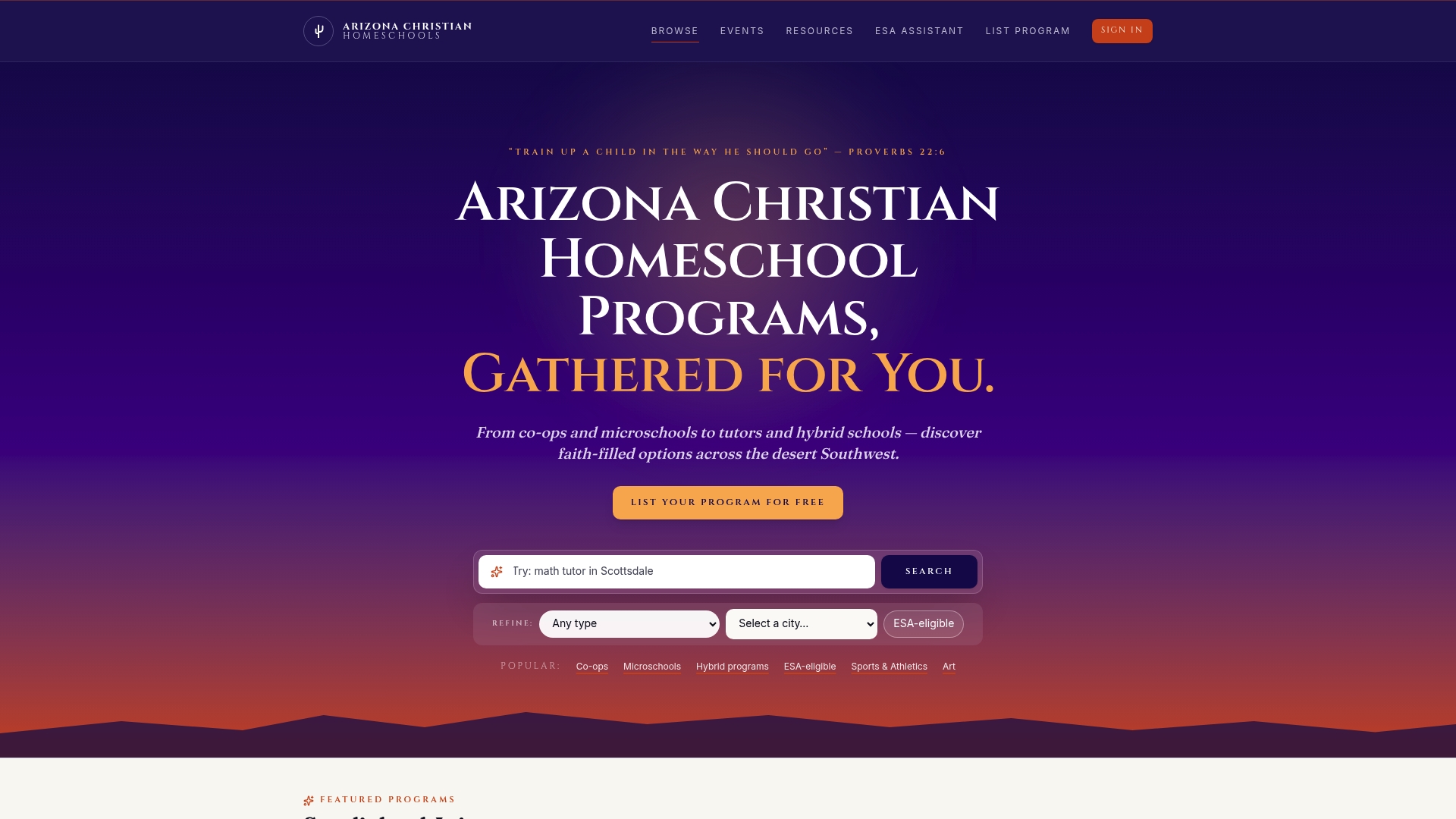
The directory lists Christian homeschool co-ops, hybrid programs, and curriculum providers across Arizona, many of which offer math instruction, tutoring, or co-op classes built around the programs covered in this article. Rather than teaching Saxon or Singapore entirely on your own, you can connect with a local co-op that already runs these curricula in a group setting, or find a hybrid program that handles math instruction two or three days per week while you cover other subjects at home.
Browse homeschool co-ops near you or explore hybrid homeschool programs in Arizona to find a community that fits your family's schedule, faith values, and math goals. ESA-eligible families can use scholarship funds toward many of these programs, reducing the out-of-pocket cost of adding structured math support.