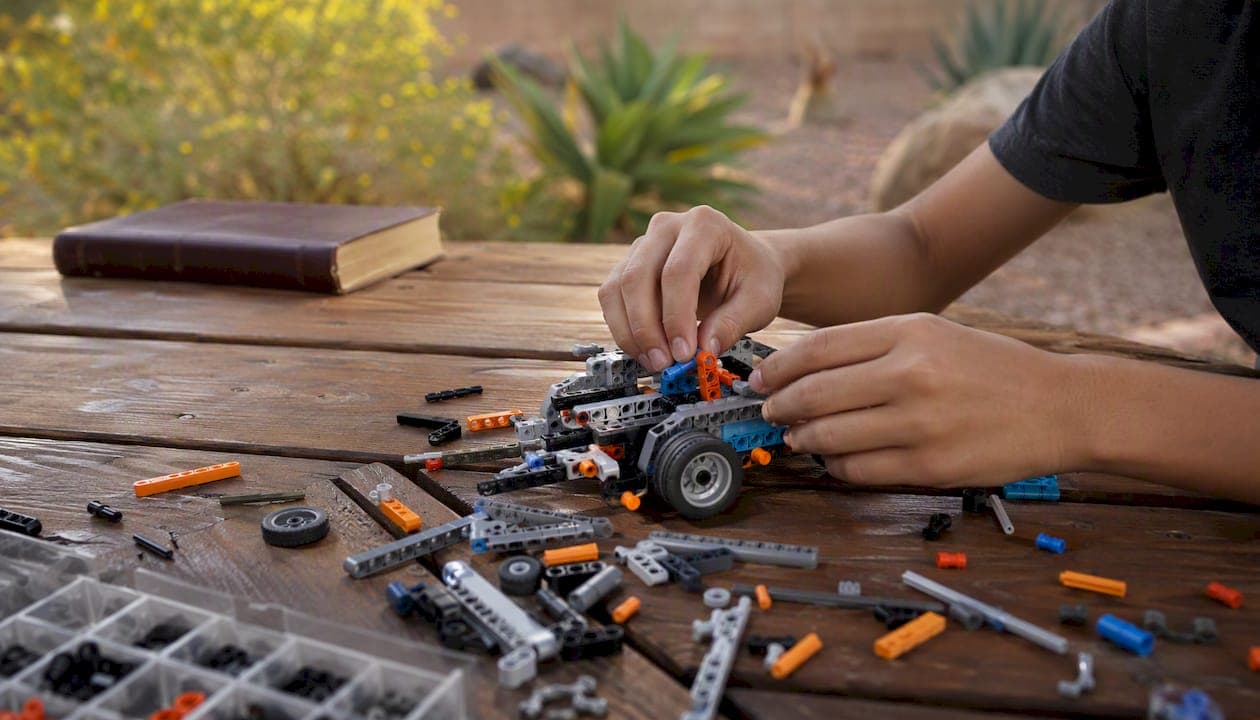
If you homeschool in Arizona and want robotics for your child, start by checking daytime museum unit studies, local community clubs, and FIRST-affiliated teams. Those three categories cover nearly every entry point, from a curious first-grader stacking gears to a teenager coding a competition robot.
Here's what to do this week:
- Check the Arizona Science Center's homeschool unit study schedule, which runs monthly sessions on weekdays during daytime hours
- Run a FIRST team search for your city, and note that Arizona's FIRST season generally runs August through February.
Key Takeaways
Homeschool families in Arizona get the best results by starting with daytime museum programs, then layering in a nonprofit or franchise club matched to their child's age and interest.
| Point | Details |
|---|---|
| Start with daytime programs | Arizona Science Center's unit studies run monthly, Tuesdays and Thursdays, 10:00 a.m. to 2:00 p.m., built for homeschool schedules. |
| Match program to goal | Museum workshops build exposure; nonprofit teams like Litchfield Robotics build competition skill on a August to February season. |
| Ask about screening and fees | Confirm background-check policies for mentors and get a clear breakdown of monthly, per-session, and tournament costs before enrolling. |
| Starting a team takes little | A 5 to 8 student roster, one willing mentor, and a borrowed meeting space are enough to launch a homeschool FIRST team. |
| Use the directory for fit | Arizona Christian Homeschools helps families locate faith-friendly co-ops and enrichment programs that pair well with robotics scheduling. |
Table of Contents
- Homeschool-Friendly Robotics Clubs Arizona Families Rely On
- How to Join a Team or Start Your Own Homeschool Robotics Club
- Museum Workshops, Franchise Classes, Nonprofit Teams, or Competition Squads?
- Statewide Resources Every Arizona Homeschool Family Should Bookmark
- Finding Nearby Sessions, Competitions, and Homeschool-Friendly Clubs
- Sources
- FAQ
Homeschool-Friendly Robotics Clubs Arizona Families Rely On
Arizona's robotics scene splits roughly into museum programs, franchise classes, nonprofit competition teams, and community club programs run through youth organizations. Each fills a different need, and most were built with flexible scheduling in mind, which matters if your school day doesn't run on a public-school clock.
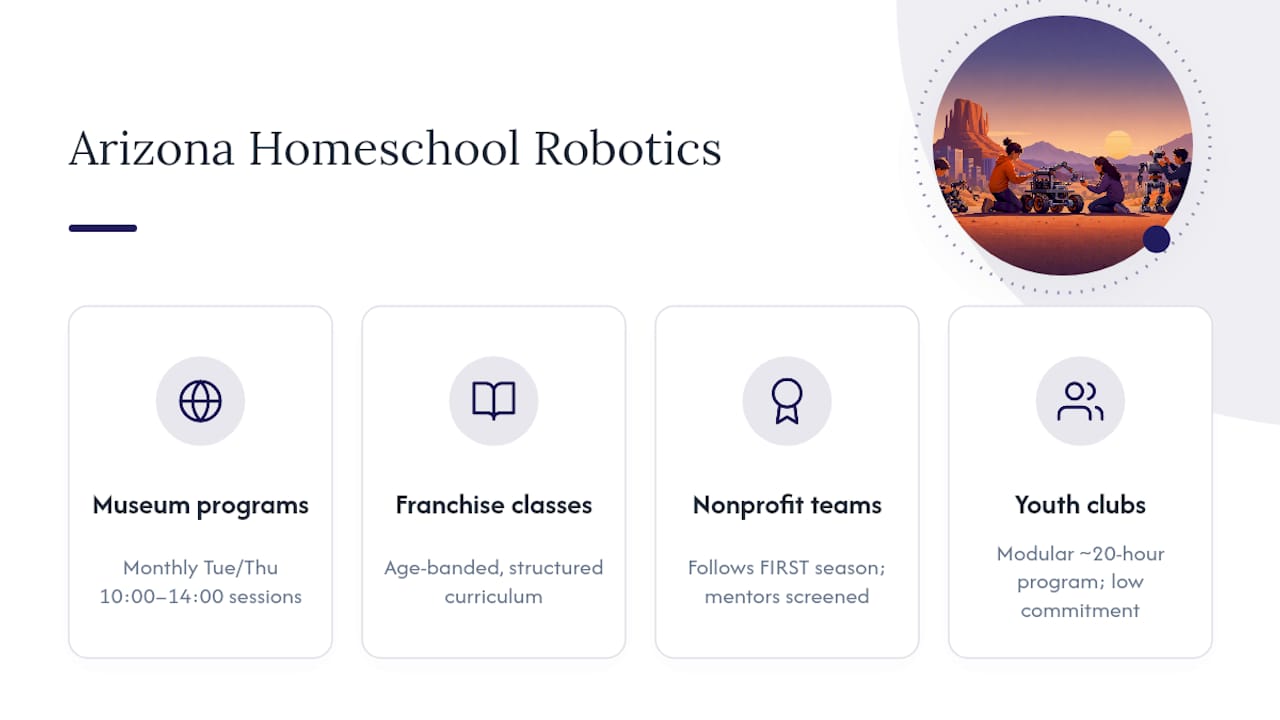
The Arizona Science Center in Phoenix runs homeschool unit studies for grades 1 through 12, meeting monthly on Tuesdays and Thursdays from 10:00 a.m. to 2:00 p.m. Recent themes have covered user-centered design and rapid prototyping, hands-on work that pairs naturally with a STEM-heavy homeschool curriculum. Because sessions run during traditional school hours, they're built for families who aren't tied to an after-3 p.m. schedule.
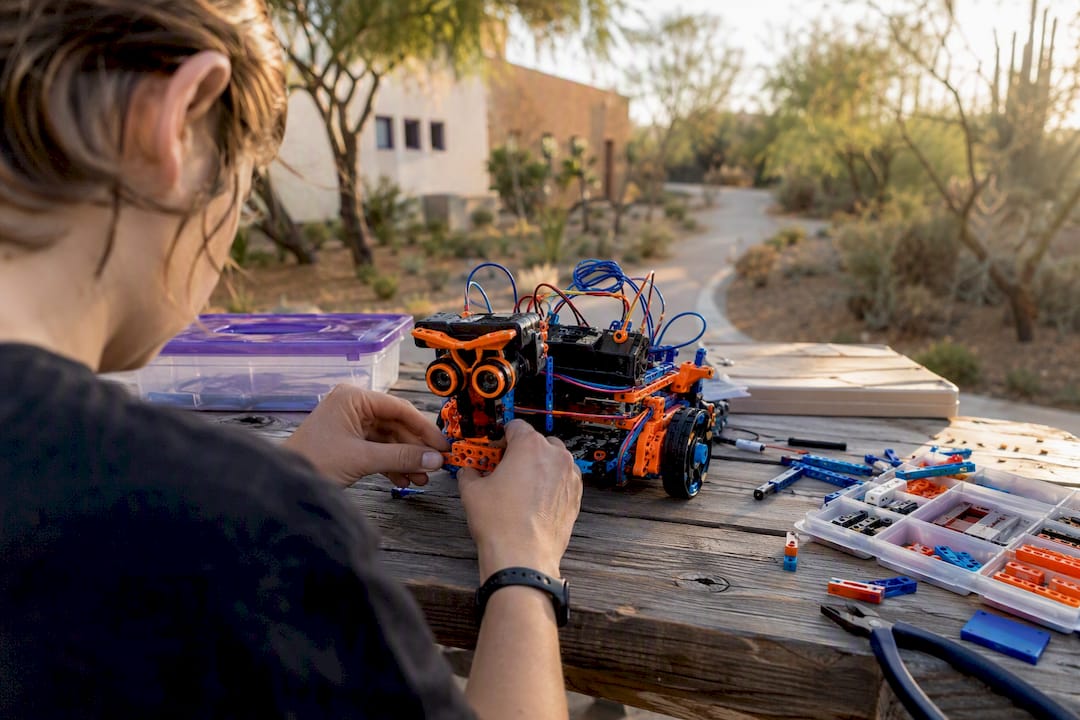
Snapology of Gilbert offers age-banded classes including Kinderbots, Gamebots, Real World Robotics, and Creature Creator, serving children in early childhood through early teens. This is a franchise model, so expect structured curriculum and classroom-style instruction rather than open-ended tinkering. It's a strong entry point for younger children who need a defined lesson plan before jumping into team-based competition.
Litchfield Robotics is a West Valley nonprofit that supports FIRST LEGO League and FIRST Tech Challenge teams, helping families form new teams, mentor coaches, and organize events across multiple West Valley cities. Their season generally tracks the FIRST calendar that runs through the school year, so contacting them in late spring gives you the best shot at a roster spot.
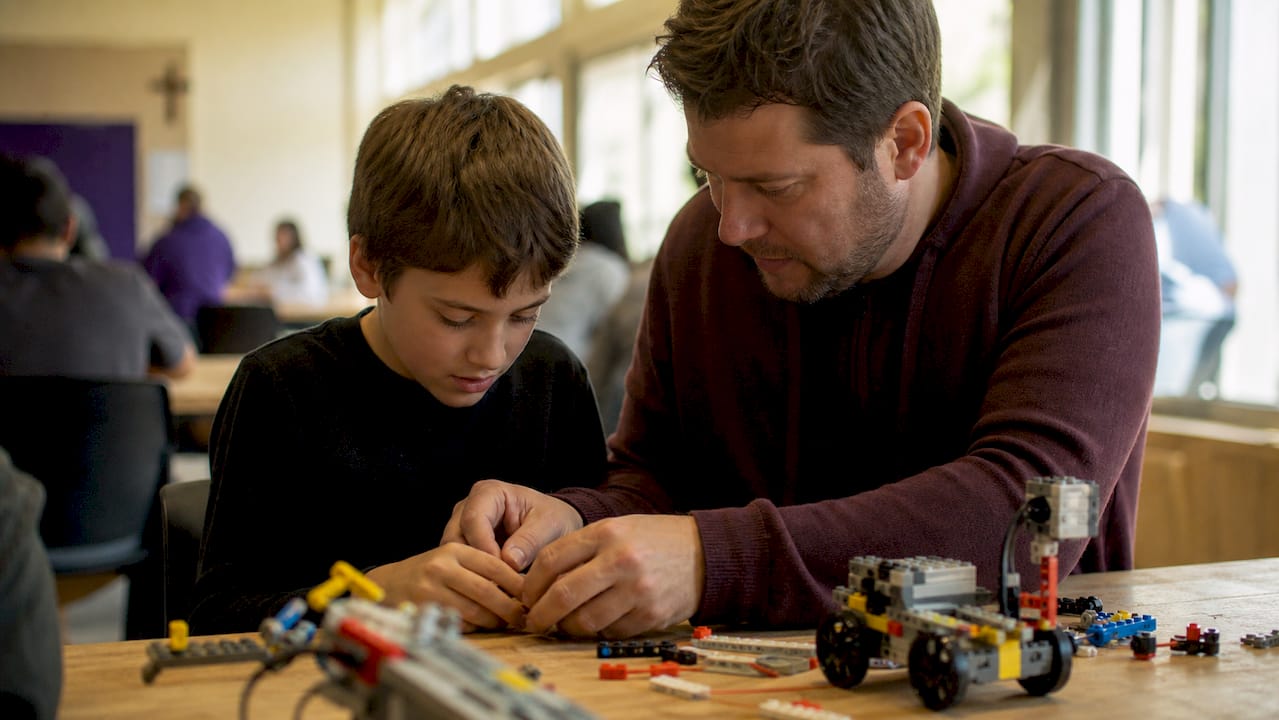
Boys & Girls Clubs of the Valley runs a LEGO robotics program at club sites across the Valley, typically structured as a modular program of roughly 20 hours. It's an accessible, lower-commitment option if your child just wants to see whether robotics clicks before you invest in a competitive team.
In Tucson, families often point to programs like Prolific Creations or local CTRL+CRE8 style makerspace clubs, along with homeschool co-op robotics groups that meet at churches, libraries, or community centers. Dotty's Place, an Arizona STEM nonprofit, runs pop-up STEM nights and hands-on demos that many homeschool groups use as low-pressure introductions before committing to a full club.
Pro Tip: Before enrolling, ask directly whether the program is "open to homeschoolers" and whether mentors and coaches undergo background checks. Programs affiliated with FIRST or run through nonprofits like Litchfield Robotics almost always screen adult volunteers, but smaller pop-up clubs may not, so ask.
How to Join a Team or Start Your Own Homeschool Robotics Club
Joining an existing club is usually the faster path. Starting your own makes sense when no nearby option fits your child's age, schedule, or interest level.
To join an existing team or class:
- Email or call the program to ask about open homeschool slots, daytime meeting options, and whether a trial visit is available.
- Attend a trial meeting with a laptop (if coding is involved), water, and a notebook. Most first visits are observation-friendly, so your child can watch before committing.
- Ask about the fee structure upfront. Monthly club fees, per-session workshop pricing, and separate tournament entry fees are all common, and they're rarely bundled the same way twice.
To start a homeschool team from scratch:
- Recruit 5 to 8 students. FIRST LEGO League and similar programs are built around small team sizes, so you don't need a huge roster.
- Find one volunteer mentor with some technical comfort. You don't need an engineer. A parent willing to learn alongside the kids works fine.
- Secure a consistent meeting space. A church fellowship hall, library meeting room, or co-op classroom all work.
- Choose a competition path and matching kit. FIRST LEGO League uses LEGO-based kits; FIRST Tech Challenge steps up to more advanced robotics hardware.
Litchfield Robotics notes that teams that plan ahead typically recruit and message in late spring, lock in mentors by early summer, and run dedicated build sessions during the typical FIRST robotics season. Watch for red flags when vetting any organizer: no clear background-check policy for adults working with kids, vague or shifting fee explanations, and no published meeting calendar.
Museum Workshops, Franchise Classes, Nonprofit Teams, or Competition Squads?
Not every program serves the same goal, and picking the wrong format wastes both time and money. Museum unit studies and franchise classes build exposure and confidence. Nonprofit teams and competition squads build skill under real pressure, with real deadlines.
- Museum workshops (Arizona Science Center): one-off or monthly exposure, low time commitment, no special equipment needed, best for grades 1 to 12 wanting a taste of STEM concepts.
- Franchise classes (Snapology): weekly structured lessons, moderate cost, best for ages 3 to 14 who need guided curriculum rather than open exploration.
- Community club programs (Boys & Girls Clubs): short modular sessions, minimal cost, best for kids testing interest before a bigger commitment.
- Nonprofit competition teams (Litchfield Robotics, FIRST-affiliated squads): seasonal commitment from August to February, tournament fees plus kit costs, best for kids ready for team deadlines and travel to competitions.
Statewide Resources Every Arizona Homeschool Family Should Bookmark
A handful of organizations anchor almost every robotics option in the state, and knowing how each one functions saves hours of searching.
- FIRST runs the FLL, FTC, and FRC competitive pathways and offers a team search tool that lets you filter by location to find active teams near you.
- Arizona Science Center publishes its homeschool unit study calendar with grade bands and daytime scheduling built for homeschool families specifically.
- ASU Engineering outreach supports Arizona FIRST LEGO League activity (AZFLL), coordinating mentors and partner support for local teams.
- Boys & Girls Clubs of the Valley offers a standing LEGO robotics program at multiple club sites.
The strongest teams treat robotics as what FIRST calls "the sport for the mind": inclusive, team-based, and focused on mentorship over a win-at-all-costs record. That framing matters most for homeschool families weighing a competitive team against a lower-pressure club.
Finding Nearby Sessions, Competitions, and Homeschool-Friendly Clubs
A few direct links save the most searching time:
- FIRST team search for local FLL and FTC teams.
- Arizona Science Center unit studies for the current homeschool schedule.
- Boys & Girls Clubs LEGO robotics program page.
- ASU outreach AZFLL page for mentor and partner contacts.
Search "[your city] homeschool robotics" directly, and reach out in late spring, before team rosters fill for the August season. Also check our guide to homeschool events across Arizona for pop-up STEM nights and seasonal meetups.
Why Community Robotics Fits Naturally Into a Homeschool Plan
Robotics clubs give homeschool families something a curriculum alone can't: a room full of other kids solving the same hard problem. Arizona Christian Homeschools exists to help you find those rooms, whether it's a faith-friendly co-op or a daytime STEM program that fits your family's rhythm, and ESA funds can often help cover the enrollment cost.
— Grant
Find Faith-Friendly Robotics and Enrichment Options Near You
Arizona Christian Homeschools is built to save you the hours of scattered searching this article just walked you through. Instead of checking five separate websites for co-ops, robotics groups, and enrichment programs one at a time, you search one directory filtered for homeschool-friendly scheduling and Christian community values.
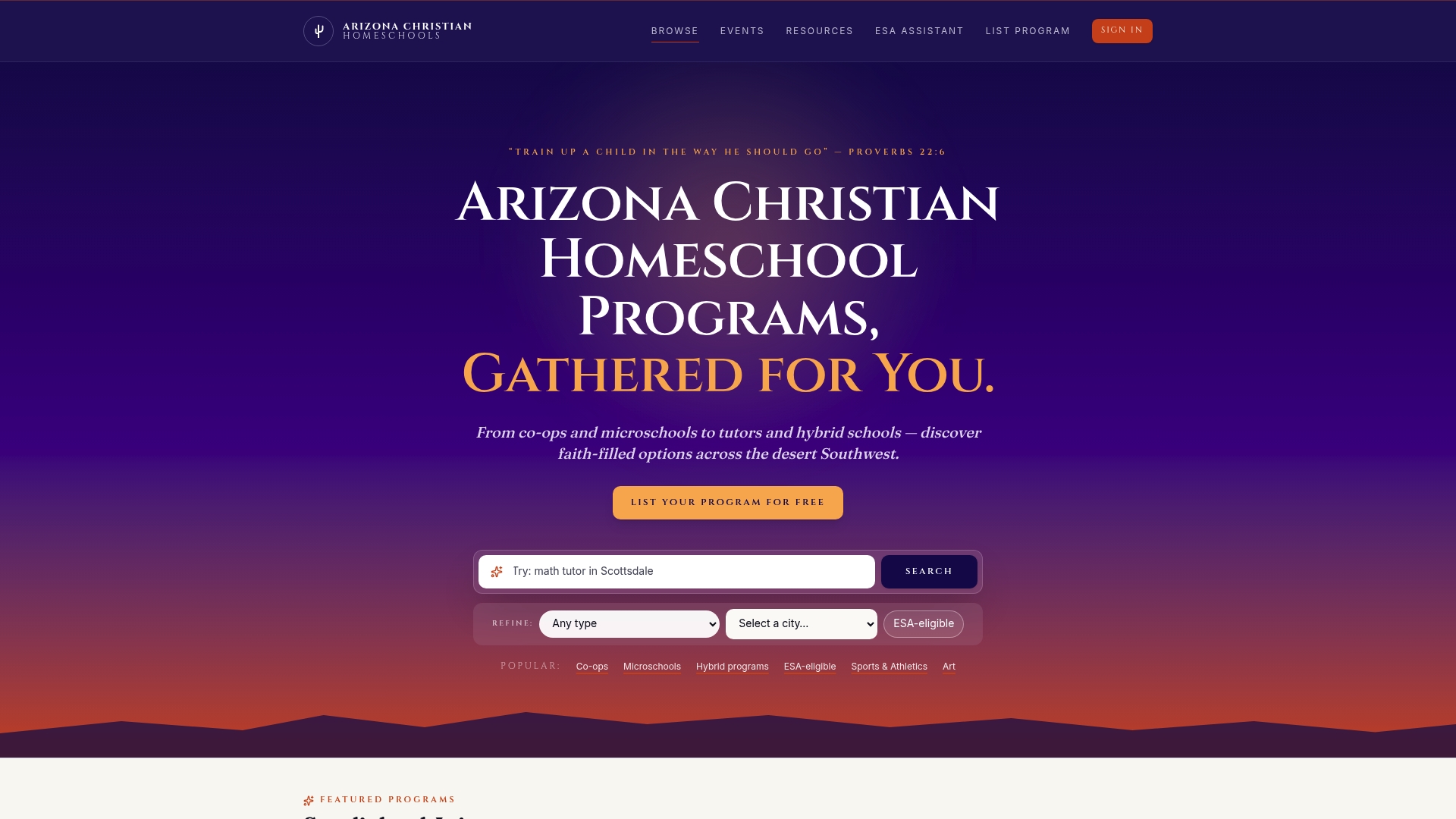
Browse the Homeschool Co-ops Near Me directory to find local groups that pair well with a robotics club schedule, and check our ESA enrichment guide to see whether your child's robotics fees qualify for funding. Start your search today and get a shortlist of programs that actually fit your family's calendar and values.
Sources
- Unit Studies - Arizona Science Center
- Litchfield Robotics
- FIRST LEGO League (FLL) — FIRST
- ASU outreach — AZFLL
FAQ
How much money do parents get for homeschooling in Arizona?
Arizona's Empowerment Scholarship Account (ESA) amount varies by student and grade level, and covers a range of eligible expenses including some enrichment and STEM programs. Check the ESA enrichment guide for current eligibility details and how robotics-related costs may qualify.
What is the best age to start robotics?
Programs like Snapology's Kinderbots start as young as age 3, while FIRST LEGO League typically serves elementary through middle school students. Most families find that any age from kindergarten onward works, as long as the program's format matches the child's attention span and reading level.
What are the best homeschool programs in Arizona?
The strongest options combine a solid academic co-op or hybrid program with targeted enrichment like robotics, and Arizona Christian Homeschools' directory lists co-ops, microschools, and hybrid programs across the state. Pairing an academic co-op with a robotics club at a museum or nonprofit gives kids both structure and hands-on STEM exposure.
What school has the best robotics program?
Rather than one standout school, Arizona's strongest robotics access comes through nonprofit teams like Litchfield Robotics and FIRST-affiliated squads, which are open to homeschoolers and don't require public school enrollment. FIRST's team search tool lets you compare active teams by location and program type.