
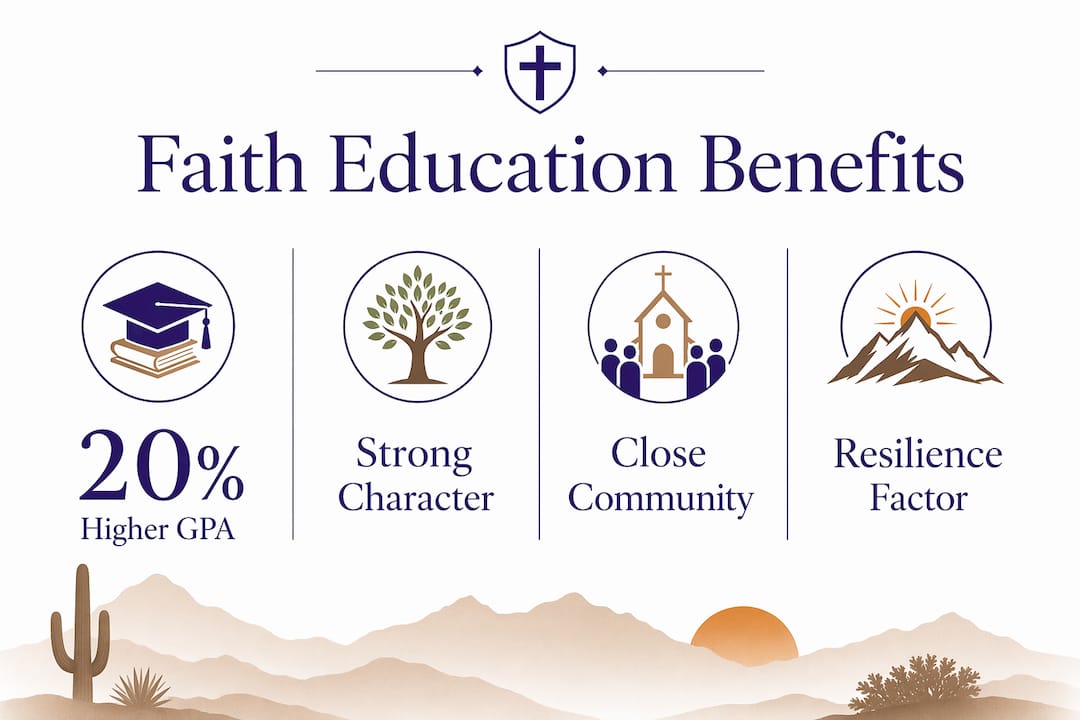
Faith-based education is defined as a structured approach that integrates religious values, moral instruction, and academic learning into a single, unified experience for students. Research confirms that this model produces measurable gains in academic performance, character development, and community belonging. Middle and high school students with high religious participation score .144 GPA points higher on average than non-participants. That number is small on paper, but it reflects a consistent pattern across demographics. For Arizona families weighing their options, understanding what drives those outcomes matters as much as the outcomes themselves.
What are the core faith based education benefits?
Faith-based education benefits students most when religious values become part of how they think, not just what they hear. Research shows that internalizing religious values strongly predicts student task orientation and engagement, with a beta coefficient of 0.67 in structural equation modeling. That single finding explains a large share of why students in faith-integrated settings stay focused and motivated. When a student genuinely believes that diligence and honesty matter, those beliefs shape daily academic behavior.
The academic gains go beyond GPA. Faith-based education integrates ethical guidance, strong teacher-student relationships, and disciplined environments that raise both engagement and educational aspiration. Teachers in these settings often know students by name, by family, and by faith background. That relational depth creates accountability that a large, anonymous classroom rarely replicates.

Arizona families choosing faith-integrated schooling also benefit from what researchers call a resilience factor. Active religious community engagement buffers academic stress and builds perseverance in students. A student who faces a difficult exam or a social conflict draws on a community that reinforces their worth and purpose. That buffer is a structural advantage, not a soft benefit.
Pro Tip: When evaluating a faith-based school or homeschool program, ask specifically how religious values are integrated into daily instruction, not just chapel or Bible class. Programs where faith shapes every subject produce the strongest academic and character outcomes.
How does faith affect learning and character development?
Character development is the most consistent outcome cited across research on Christian schooling. Faith education weaves character instruction into daily routines rather than treating it as a separate subject. Students encounter honesty, kindness, responsibility, and empathy as living expectations, not abstract ideals. Christian high schools create cultures of academic integrity that actively reduce cheating and nurture long-term responsibility.
The practical results show up in how students handle pressure. A student trained to value integrity does not cheat when a test is hard. A student trained in empathy resolves peer conflict differently than one who has never been taught to consider another person's perspective. These are not incidental outcomes. They are the direct product of a faith integrated curriculum that treats character as a core subject.
Service learning and community projects reinforce these traits in concrete ways. When students volunteer at a food bank, tutor younger children, or participate in church outreach, they practice humility and gratitude in real situations. Inclusive religious education strengthens character and social cohesion by embedding values within the curriculum, supporting moral maturity that prepares students for adult life.
Key character traits developed through faith-based schooling include:
- Honesty: Students learn that truthfulness is a moral obligation, not just a social preference.
- Responsibility: Assignments, commitments, and community roles are treated as expressions of stewardship.
- Empathy: Biblical instruction on loving one's neighbor translates into practiced compassion toward peers.
- Resilience: Faith communities teach students to persevere through difficulty with purpose and hope.
- Gratitude: Service projects and worship practices build awareness of blessings and reduce entitlement.
Pro Tip: Look for programs that include structured service learning, not just academic coursework. Students who serve regularly develop stronger empathy and leadership skills than those who only study about values.
What does community support look like in faith-based schools?
Community is one of the most underrated advantages of faith-based schools. Students in faith schools experience tighter communities with involved families and caring teachers, which enhances belonging and support. Smaller class sizes mean teachers notice when a student is struggling, academically or personally. That early attention prevents small problems from becoming large ones.
The community culture in faith-based settings also creates consistency between home and school. When a family's values align with the school's values, students receive the same message from both environments. That alignment reduces the cognitive dissonance that many students feel when home expectations conflict with school culture. For Arizona families, this consistency is especially valuable given the wide range of educational philosophies present across the state.
Technology-enhanced learning models in faith settings positively influence religious character development when balanced with student wellbeing and social skills. This finding matters because it shows that modern pedagogy and faith formation are not in conflict. A well-designed faith-based program uses technology as a tool while keeping human relationships and spiritual formation at the center.
| Feature | Faith-based setting | Typical large classroom |
|---|---|---|
| Class size | Smaller, more personal | Larger, less individual attention |
| Teacher-student relationship | Relational and values-aligned | Often transactional |
| Community involvement | Families actively engaged | Variable parental participation |
| Character instruction | Embedded in daily curriculum | Often separate or absent |
| Resilience support | Faith community provides buffer | Depends on individual resources |
Practical benefits for families choosing faith-based education
Parental involvement is central to how faith-based education works. Parental involvement in faith-based education directly supports student motivation and educational success. Parents in these communities are not passive observers. They attend events, volunteer in co-ops, and partner with teachers on their child's formation. That active role gives parents real influence over their child's educational experience.
The practical benefits for families extend well beyond the classroom. Here are four concrete gains families consistently report:
- Stronger academic preparation: Students graduate with both academic skills and the ethical framework needed for college, career, and community leadership.
- Clearer moral foundation: Children develop a consistent worldview that helps them navigate peer pressure, social media, and moral complexity with confidence.
- Leadership readiness: Service roles, student government, and community projects prepare students for leadership in ways that purely academic programs rarely do.
- Critical thinking grounded in values: Faith-based schools promote critical thinking by engaging students with moral dilemmas integrated in a biblical worldview, which deepens analytical skills rather than limiting them.
Arizona families also benefit from the state's Empowerment Scholarship Account (ESA) program, which makes faith-based and homeschool options financially accessible. Families can use ESA funds for faith-integrated curriculum options, co-ops, and hybrid programs. That financial flexibility removes one of the most common barriers to choosing a Christ-centered education. Arizonachristianhomeschools aggregates these options in one place, making it straightforward to find programs that fit both your family's values and your budget.
Key Takeaways
Faith-based education produces measurable academic, character, and community benefits because it treats value formation and academic instruction as inseparable.
| Point | Details |
|---|---|
| Academic performance gains | Students with high religious participation average .144 GPA points higher than non-participants. |
| Value internalization drives engagement | Religious value internalization predicts task orientation with a beta of 0.67, explaining large variance in focus. |
| Character is a core subject | Faith-integrated curricula embed honesty, empathy, and responsibility into daily routines, not separate lessons. |
| Community creates resilience | Faith communities buffer academic stress and build perseverance, giving students a structural advantage. |
| Parental involvement amplifies outcomes | Active parental partnership in faith-based settings directly strengthens student motivation and success. |
Why I think the formation argument is the strongest one
Most conversations about the advantages of faith-based schools focus on GPA and test scores. Those numbers are real and worth citing. But the argument that actually holds up over time is the formation argument. Faith-based education emphasizes formation over mere information, focusing on nurturing inherent worth and purpose beyond grades. That distinction changes everything about how a school operates.
I have watched families choose faith-based programs for the academic reputation and stay for the community. The moment a parent realizes that their child's teacher knows their child's name, their struggles, and their faith background, something shifts. That relational depth is not something you can manufacture with a curriculum alone. It comes from a shared commitment to the same values.
The character formation piece also matters more than most families expect when they start. A student who graduates with strong grades but no ethical framework is not well-prepared for adult life. A student who graduates knowing how to serve others, resolve conflict with integrity, and persevere through difficulty is genuinely ready. Faith-based schooling, done well, produces the second kind of student consistently.
For Arizona families specifically, the combination of ESA funding, a growing network of co-ops and hybrid programs, and resources like Arizonachristianhomeschools makes this path more accessible than it has ever been. The question is not whether faith-based education works. The research answers that clearly. The question is which program fits your family's specific needs and values.
— Grant
Finding the right faith-based program for your family
Arizonachristianhomeschools connects Arizona families with Christ-centered educational options across the desert Southwest, from full-time private Christian schools to flexible hybrid programs and co-ops.
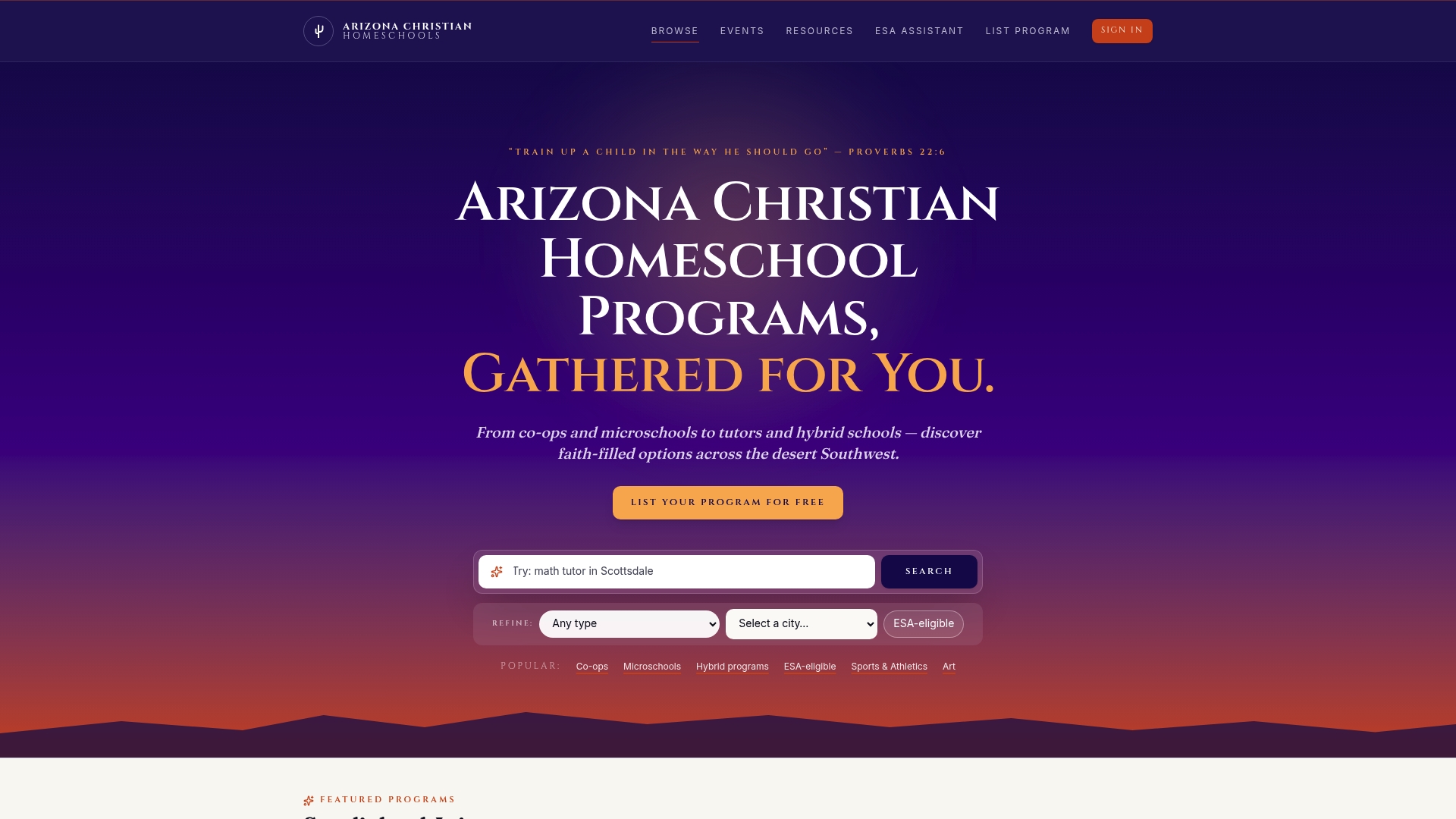
Families can browse faith-integrated curriculum options including structured programs designed for homeschoolers who want both academic rigor and spiritual formation. The directory also lists homeschool co-ops near you where students build community alongside their coursework. Arizona's ESA program makes many of these options eligible for funding, reducing the financial barrier for families ready to make the switch. Arizonachristianhomeschools makes it straightforward to find the right fit without sorting through dozens of disconnected sources.
FAQ
What are the main faith based education benefits for children?
Faith-based education produces higher academic engagement, stronger character development, and tighter community support. Research links religious value internalization to measurable gains in GPA and task orientation.
How does a faith integrated curriculum differ from standard schooling?
A faith integrated curriculum weaves biblical values, ethical instruction, and spiritual formation into every subject rather than treating them as separate from academics. This approach shapes how students think, not just what they know.
Does religious education improve academic performance?
Yes. Students with high religious participation score higher on GPA on average than non-participants, with faith community engagement also building the resilience that supports academic perseverance.
What role does community play in faith-based schools?
Faith-based schools create tighter communities with involved families and caring teachers, which strengthens student belonging and reduces the isolation that can hurt academic performance and mental health.
Can Arizona families use ESA funds for faith-based homeschooling?
Yes. Arizona's Empowerment Scholarship Account program covers many faith-based curriculum and program costs, including co-ops and hybrid schools listed through Arizonachristianhomeschools.