Start with Arizona Christian Homeschool Programs. It is the most practical first step for Scottsdale families because it aggregates local Christian co-ops, flags ESA-eligible programs, and shows meeting cadence and contact details in one place. Three groups worth contacting right away:
- Little Angels Pre-School Homeschool Co-op — Preschool ages, faith-centered ministry through Assumption Greek Orthodox Christian Church in Scottsdale. Ideal for families with young children seeking a Christ-centered community setting.
- Classical Conversations of Scottsdale North — K–12, meets weekly, membership fees required. A classical Christian curriculum support network with structured academic expectations.
- Apex Homeschoolers of Scottsdale and Fountain Hills — Serving school-age children in elementary to middle school years, parent-volunteer led, offering co-op classes, field trips, and park days.
Most families move from first inquiry to a trial day within a few weeks, depending on the group's meeting schedule.
Table of Contents
- What does co-op membership actually require from your family?
- What does a typical co-op week look like in Scottsdale?
- How do you choose the right co-op for your children?
- Questions to ask before you commit to a co-op
- What do Scottsdale co-ops typically cost?
- Arizonachristianhomeschools makes finding the right co-op faster
- Key Takeaways
What does co-op membership actually require from your family?
Every co-op in the Scottsdale homeschool community operates on a shared-commitment model. Parent participation is not optional. Most groups ask at least one parent per family to teach or assist in a class each week, coordinate a field trip, or serve in an administrative role each semester.
Paperwork comes before participation. Apex Homeschoolers requires members to submit an Affidavit of Intent to Homeschool and sign a code of conduct before joining. Liability waivers are standard across volunteer-led groups. Families who prepare these documents before their first inquiry move through onboarding noticeably faster.
Pro Tip: Arizona law requires all homeschooling families to file an Affidavit of Intent to Homeschool with their local school district within 30 days of beginning. Having it ready before you contact a co-op removes the most common delay.
Faith-based co-ops also expect members to support the group's doctrinal environment. That means upholding a Biblical worldview in interactions, respecting the group's statement of faith, and modeling grace in disagreements.
What does a typical co-op week look like in Scottsdale?
Most Scottsdale co-op groups meet once a week during a school season running roughly September through May. A single meeting day usually combines two to four classes, with homework assigned between sessions. Co-ops are designed to supplement home instruction, not replace it. Core subjects stay at home; co-op classes handle enrichment, labs, rhetoric, or subjects that benefit from group discussion.
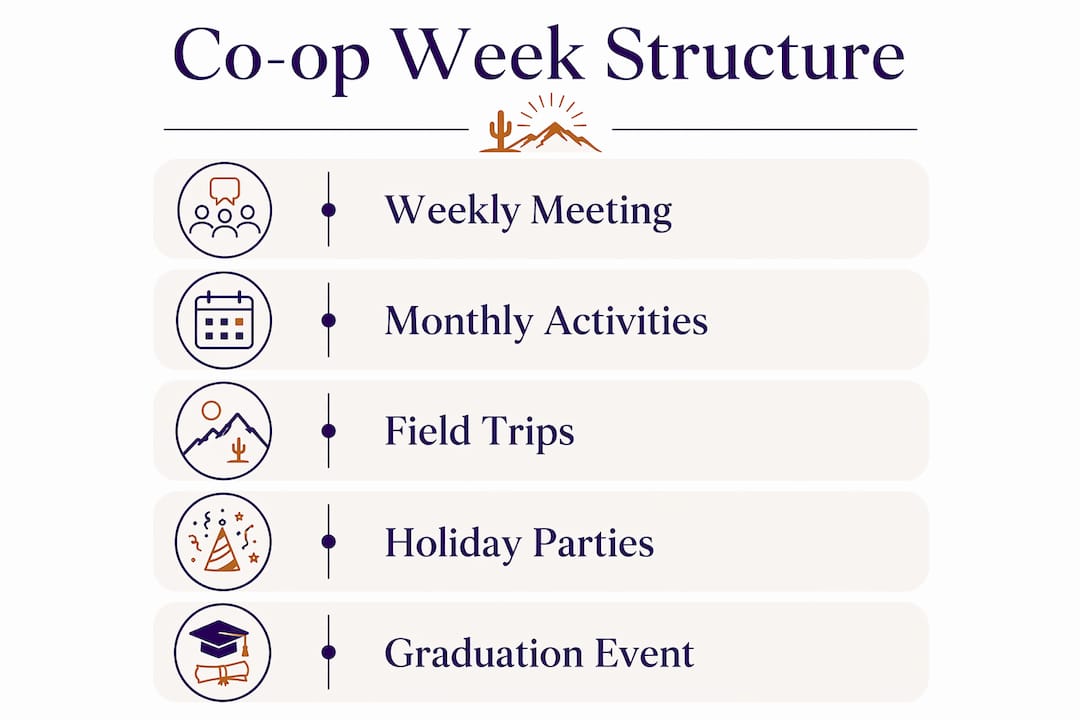
Apex Homeschoolers layers in monthly activities, field trips across Arizona, holiday parties, and an end-of-year graduation ceremony for all grade levels. Classical Conversations of Scottsdale North structures its weekly meetings around the classical model: grammar, dialectic, and rhetoric stages depending on the student's age. Families with preschoolers find Little Angels a gentler entry point, with shared learning and fellowship rather than formal academic classes.
How do you choose the right co-op for your children?
Four criteria matter most when comparing Christian co-op programs in Scottsdale:
| Criterion | What to evaluate |
|---|---|
| Age and grade range | Does the group serve your child's current stage, K–12 or preschool only? |
| Curriculum style | Classical, Charlotte Mason, textbook-based, or eclectic? |
| Doctrinal alignment | Nondenominational Christian, Greek Orthodox, or a specific confession? |
| Extracurriculars | Field trips, park days, graduation ceremonies, sports, or arts? |
Class size also shapes the experience. Smaller groups allow more parent involvement and tighter community bonds. Larger networks like Classical Conversations offer more structured academic accountability. If your family uses or plans to adopt a specific curriculum, check whether the co-op's approach complements it. The Christian homeschool curriculum directory on Arizonachristianhomeschools can help you cross-reference options.

For families who need supplemental academic support alongside co-op classes, specialty tutoring services can fill gaps in college-prep or advanced subjects.
Questions to ask before you commit to a co-op
Go into your first conversation with a group leader prepared. These questions surface the details that matter:
- What is the parent commitment per week, and what happens if a family misses a session?
- Does the co-op have a written statement of faith, and how is it applied day to day?
- How are disputes or behavioral issues handled among students and families?
- Are classes graded, and do teachers assign homework?
- Is the group ESA-eligible, and how are fees structured?
Red flags to watch for: A co-op with no written code of conduct, no clear leadership structure, or no defined meeting schedule is likely to be inconsistent. Avoid groups that cannot answer basic questions about their faith emphasis or that pressure families to commit before attending a trial day.
What do Scottsdale co-ops typically cost?
Co-op fees in the Scottsdale area vary by group size, structure, and the number of classes offered. Classical Conversations of Scottsdale North charges membership fees as part of its national network model. Parent-volunteer groups like Apex Homeschoolers tend to keep costs lower, with fees covering materials and event expenses rather than instructor salaries.
Arizona's Empowerment Scholarship Account (ESA) program can offset costs for eligible families. The Arizona Christian co-op directory flags which programs accept ESA funds, which removes much of the guesswork when budgeting. Families should confirm ESA eligibility directly with each group and with the Arizona Department of Education before enrolling.
Arizonachristianhomeschools makes finding the right co-op faster
Searching co-op by co-op across Facebook groups and individual websites takes hours. Arizonachristianhomeschools puts Scottsdale's Christian co-ops, microschools, tutors, and hybrid programs in one searchable directory, with ESA eligibility flags and contact details already organized.
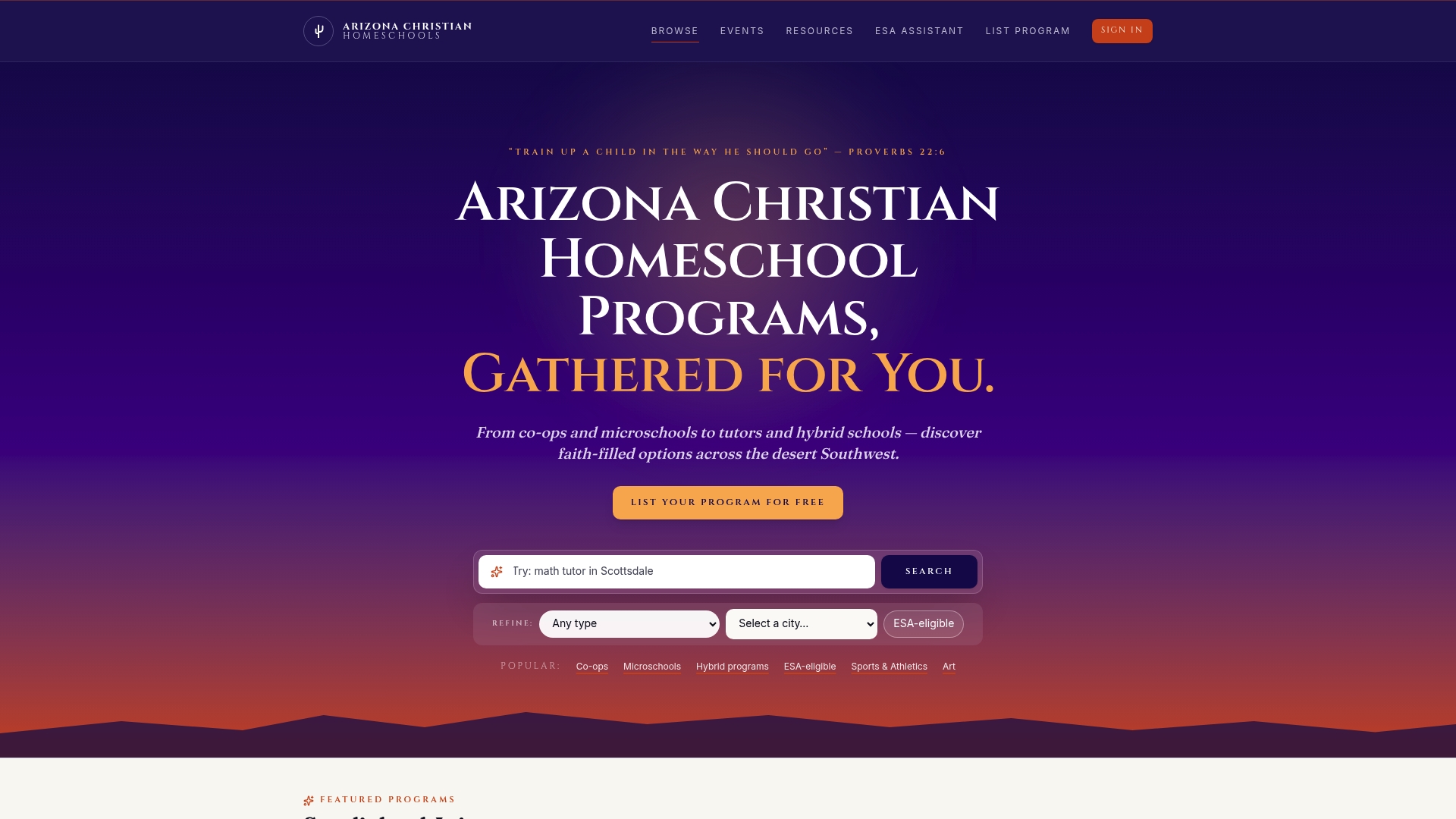
Three steps to get started:
- Search by Scottsdale on the co-op directory and filter by your child's age range and faith emphasis.
- Review meeting cadence, fees, and leadership model for each listing before reaching out.
- Contact the group leader, ask about a trial day, and bring your completed Affidavit of Intent to Homeschool and any required waivers.
Listings are free for programs, and the directory includes an events calendar and curriculum resources. Families researching curriculum options alongside co-op enrollment can browse the Christian homeschool curriculum pages for programs that align with classical or faith-integrated approaches. Start your search at Arizonachristianhomeschools and connect with the Scottsdale community that fits your family.
Key Takeaways
The best homeschool co-ops in Scottsdale are faith-centered, parent-led groups that require documented legal compliance and active family participation from day one.
| Point | Details |
|---|---|
| Start with the directory | Arizonachristianhomeschools aggregates local Christian co-ops with ESA flags and contact details. |
| Prepare paperwork early | An Affidavit of Intent to Homeschool is required before most Scottsdale co-ops approve membership. |
| Co-ops supplement, not replace | Core instruction stays at home; co-op classes handle enrichment, labs, and group learning. |
| Onboarding takes 1–4 weeks | Inquiry to trial day to full membership typically runs 1–4 weeks depending on meeting schedules. |
| Arizonachristianhomeschools | Search Scottsdale co-ops by age range, faith emphasis, and ESA eligibility at arizonachristianhomeschools.com. |